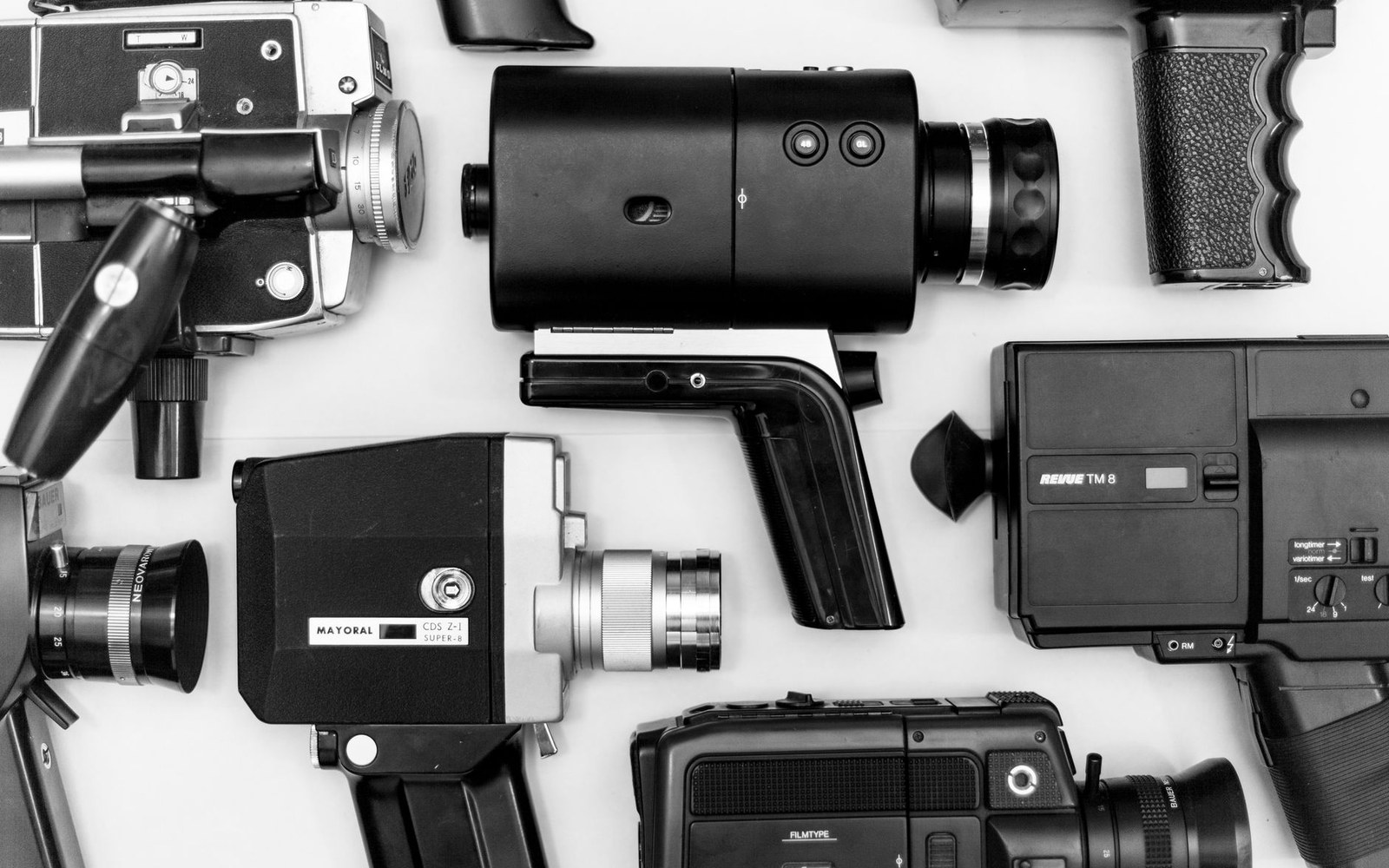
Two boxes, 6.5 kilograms, no cable between them: the package that set the next fifteen years of documentary.
The Camera That Changed Everything Weighed 6.5 Kilograms
Sync Sound Before 1960 Anchored You to a Wall
Making a documentary with synchronised sound in the 1950s meant either a bulky studio-derived camera blimped against its own motor noise, a cable tethering camera to recorder, or both. Mitchell and Auricon cameras required operators who moved slowly if at all. The recorder — typically a Westrex or early Ampex — was mains-dependent, heavy, and decidedly not shoulder-friendly. The practical result: you could film a subject speaking, but only if that subject agreed to stand still, speak loudly and tolerate the presence of a small crew managing cables and levels. Spontaneity was not on the menu.
The footage that came from these constraints looked like those constraints. Interviews in documentary films of the 1950s tend to be frontal, slightly stiff, lit for a fixed position. The subject addresses the camera, or addresses someone just off-camera, in a zone that has been carefully prepared for them. When John Grierson's creative treatment of actuality called for documentary to interpret the world rather than merely record it, the editing table did the heavy lifting — because the camera itself could not follow the world where it actually moved.
What the Éclair and the Nagra Made Possible
Two pieces of equipment dissolved that constraint. The Nagra III, a Swiss portable reel-to-reel tape recorder designed by Stefan Kudelski and introduced in the late 1950s, was light enough to carry on a shoulder strap and ran on batteries with enough stability to hold sync. The Éclair NPR — Noiseless Portable Reflex — was a 16mm camera engineered in France with a self-blimped, near-silent mechanism and a design explicitly suited to handheld operation. Together they came in at roughly 6.5 kilograms combined, manageable on a shoulder, operable by two people without a truck full of support.
The critical innovation was not just weight but the sync pulse system linking the two devices — a simple crystal or cable reference tone recorded on the Nagra's edge track that allowed sound and image to be reliably matched in the cutting room without a clapperboard in every shot. That invisible thread between camera and recorder was what Primary (1960) pointed toward, though its crew relied on custom-modified equipment rather than the Éclair and the Nagra. Robert Drew, Richard Leacock, D. A. Pennebaker and Albert Maysles followed John F. Kennedy and Hubert Humphrey through Wisconsin polling stations with a freedom that had no precedent in documentary practice. The camera went where the candidate went. The sound went with it.
The aesthetic that resulted — often called Direct Cinema — was not a philosophy that then went looking for equipment to realise it. The equipment arrived and the philosophy followed. Long takes became possible because there was no cable to trip over. Close observation of faces became possible because the camera was light enough to hold steady at conversation distance. The appearance of non-intervention, of the camera as witness rather than director, came directly from the mechanical fact of portability. Frederick Wiseman, who began shooting Titicut Follies at Bridgewater State Hospital in 1966, understood this instinctively: the Éclair let him move through institutional spaces with the rhythm of the institution rather than the rhythm of a film crew.
Chronology
- Late 1950sNagra III introduced by Stefan Kudelski
- 1960Primary shot in Wisconsin; early 1960s Éclair NPR enters production use
- 1966–67Wiseman shoots Titicut Follies at Bridgewater State Hospital
- Mid-1970sAaton camera developed in Grenoble
- 1975Arri 16SR introduced in Munich
The Next Generation Refined What the NPR Proved
The Éclair NPR was not the final word. By the mid-1970s two cameras were refining its logic. The Aaton — designed by Jean-Pierre Beauviala in Grenoble and famously described as sitting on the shoulder like a cat rather than a cannon — went further in ergonomics and introduced the in-camera timecode that would eventually replace the sync pulse entirely. The Arri 16SR, introduced by Arnold & Richter in Munich in 1975, offered comparable quietness with a modular magazine system that made reloading faster in the field. Both cameras carried the Direct Cinema inheritance forward into the video and digital transitions without abandoning the principle that had made the NPR transformative: the camera must move with the world, not ask the world to hold still.
What the Éclair and Nagra package gave documentary was not merely a new look but a new relationship between filmmaker and subject — one premised on presence rather than construction, on duration rather than the composed shot. That relationship hardened into an aesthetic, and the aesthetic hardened into an expectation that still shapes how audiences read the handheld image today.
Read next in Direct Cinema