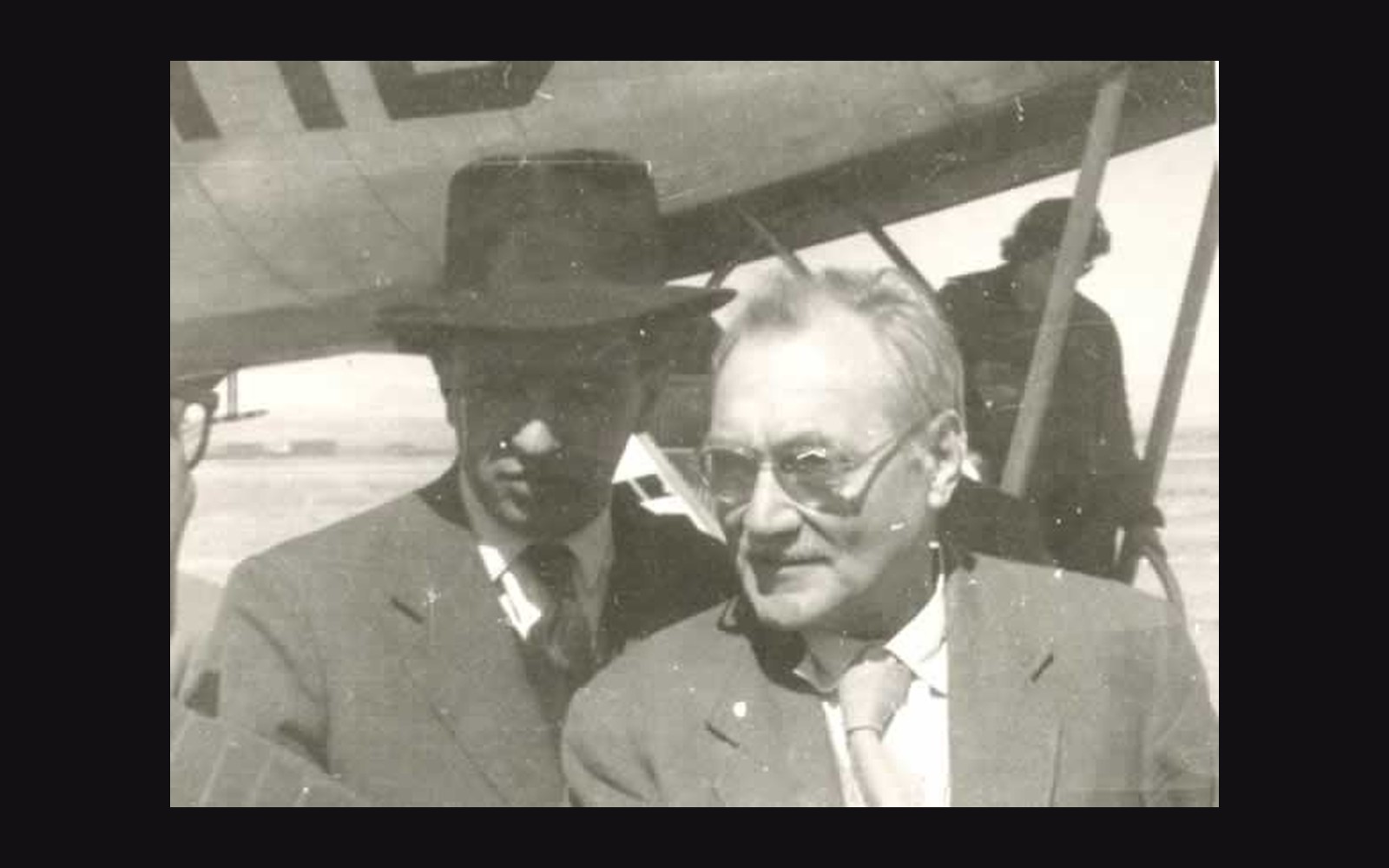
Grierson was reviewing films before he made any, which is why the definition arrived ahead of the practice.
Creative Treatment of Actuality
The Phrase That Defined a Form
John Grierson coined the phrase in 1926, reviewing Robert Flaherty's Moana for The New York Sun. The film was a record of Samoan life — graceful, unhurried, and somewhat romanticised — and Grierson reached for a formulation that would separate it, and the broader project he already had in mind, from the newsreel and the travelogue. Documentary, he wrote, had the "creative treatment of actuality." Four words that have been doing definitional work ever since.
The phrase was not a manifesto in itself. Grierson was reviewing a film he admired with reservations, and the term arrived almost in passing. What gave it longevity was the institutional weight that accumulated behind it. By the time Grierson had established the GPO Film Unit in 1933, formalised under the General Post Office and later reconstituted as the Crown Film Unit in 1940, the phrase had become something closer to a founding principle — a claim that documentary filmmakers were not mere recorders but interpreters, that the camera in the right hands could argue and illuminate.
The tension lives inside the phrase itself. "Actuality" grounds the form in the real — in recorded light and sound, in places and persons that exist independently of the filmmaker's imagination. "Creative treatment" opens the door to selection, arrangement, reenactment, and rhetoric. Grierson never pretended these were easy partners. His circle's productions make the negotiation visible: Night Mail (1936) deploys W. H. Auden's verse and Benjamin Britten's score over documentary footage of the overnight postal train; Housing Problems (1935), which Edgar Anstey and Arthur Elton made for the British Commercial Gas Association, plants its subjects directly in front of the camera and asks them to speak. Both are creative treatments. Both make a claim on the actual.
What the Phrase Authorised
The GPO Film Unit's output in the 1930s tested the limits of what creative treatment could mean without tipping into fiction. Grierson's position was essentially pragmatic: the filmmaker had an obligation to the world as found, but also a social responsibility to shape that material into something an audience could use. This is a more political claim than it first appears. "Actuality" unmediated — the newsreel — did not, in Grierson's view, produce understanding. Only interpretation, only argument embedded in form, could do that. The creative treatment was not an indulgence; it was the point.
This conviction travelled with Grierson when he crossed the Atlantic. The National Film Board of Canada, which Grierson founded in 1939 as its first Film Commissioner, built its mandate directly from the phrase. The NFB's foundational documents described its role as the production and distribution of films that would interpret Canada to Canadians and to the world — a mission that assumes exactly the gap between raw actuality and shaped meaning that the 1926 formulation had identified. Documentary was not journalism. It was, in Grierson's framework, something closer to civic education conducted by poetic means.
The phrase has since been borrowed, qualified, and occasionally contested. Bill Nichols, whose taxonomy of documentary modes — observational, participatory, expository, performative, poetic, reflexive — became standard in film studies, works within a critical landscape that Grierson's phrase helped create. The tension Nichols maps between different modes is, at root, a set of different answers to the question Grierson raised in 1926: how much treatment, and in what direction, is the actuality permitted to sustain?
Later practitioners have pushed at the seams. Errol Morris's reenactments in The Thin Blue Line (1988) are creative treatment so thoroughgoing that the film was famously not nominated for an Academy Award as a documentary. Joshua Oppenheimer's invitation to Indonesian death-squad commanders to restage their killings in The Act of Killing (2012) is creative treatment that conscripts the perpetrators themselves as authors. Neither filmmaker would claim Grierson as a direct influence, but both are answering his 1926 question with methods he never anticipated.
The phrase has not aged out. It remains the most compressed account of what documentary does that distinguishes it from both journalism and fiction — the acknowledgement that the camera never captures the world without a mind behind it, and that this fact is the form's condition, not its failing.
Read next in Grierson