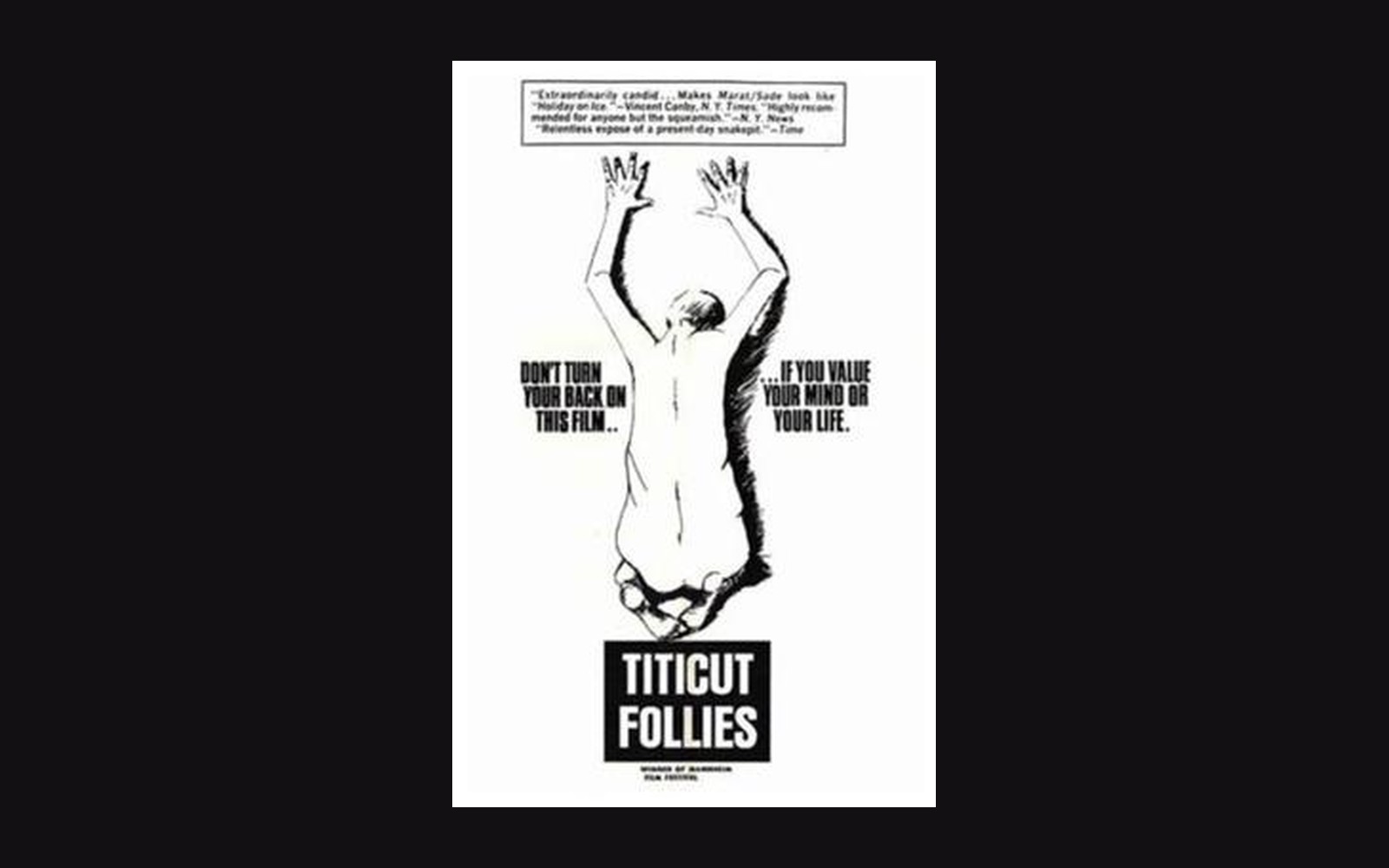
The Film Massachusetts Banned for Twenty-Four Years
A Camera Inside Bridgewater
Frederick Wiseman's debut exposed conditions inside Bridgewater State Hospital — and Massachusetts kept it from general audiences for nearly a quarter century
In the spring of 1966, Frederick Wiseman and cinematographer John Marshall spent roughly a month filming inside Bridgewater State Hospital, a Massachusetts facility housing men deemed incompetent to stand trial alongside the criminally mentally ill. The resulting film, Titicut Follies (1967), showed patients force-fed through nasal tubes, left naked in unheated cells, and subjected to degrading psychiatric interviews. No documentary had looked at institutional confinement with that degree of unblinking duration.
The Massachusetts attorney general obtained an injunction before the film could open widely, and in 1968 the Supreme Judicial Court of Massachusetts upheld a ban on public screenings. The stated grounds were twofold: that Wiseman had not secured adequate consent from patients who lacked legal capacity to give it, and that the film violated their privacy. The court ordered that screenings be restricted to audiences with professional interest — physicians, lawyers, social workers, students in relevant fields. General release was prohibited.
The legal arguments have been disputed ever since. Wiseman maintained that he had received the necessary permissions from the hospital's superintendent, who had welcomed the project; the state's position was that no official could consent on behalf of patients who were legally incompetent. The film remained in this restricted state for twenty-three years, circulating only in medical and legal education contexts.
The ban was partially lifted in 1991, when a Massachusetts Superior Court judge ruled that the passage of time — and the deaths of most of the patients shown — had sufficiently reduced the privacy interest at stake. General release was finally permitted, though Wiseman was required to append a notice to the film acknowledging the legal history.
Titicut Follies holds the distinction of being the only American film suppressed by court order for reasons other than obscenity or national security — a fact that remains as unsettling as the footage itself.
Read next in Direct Cinema