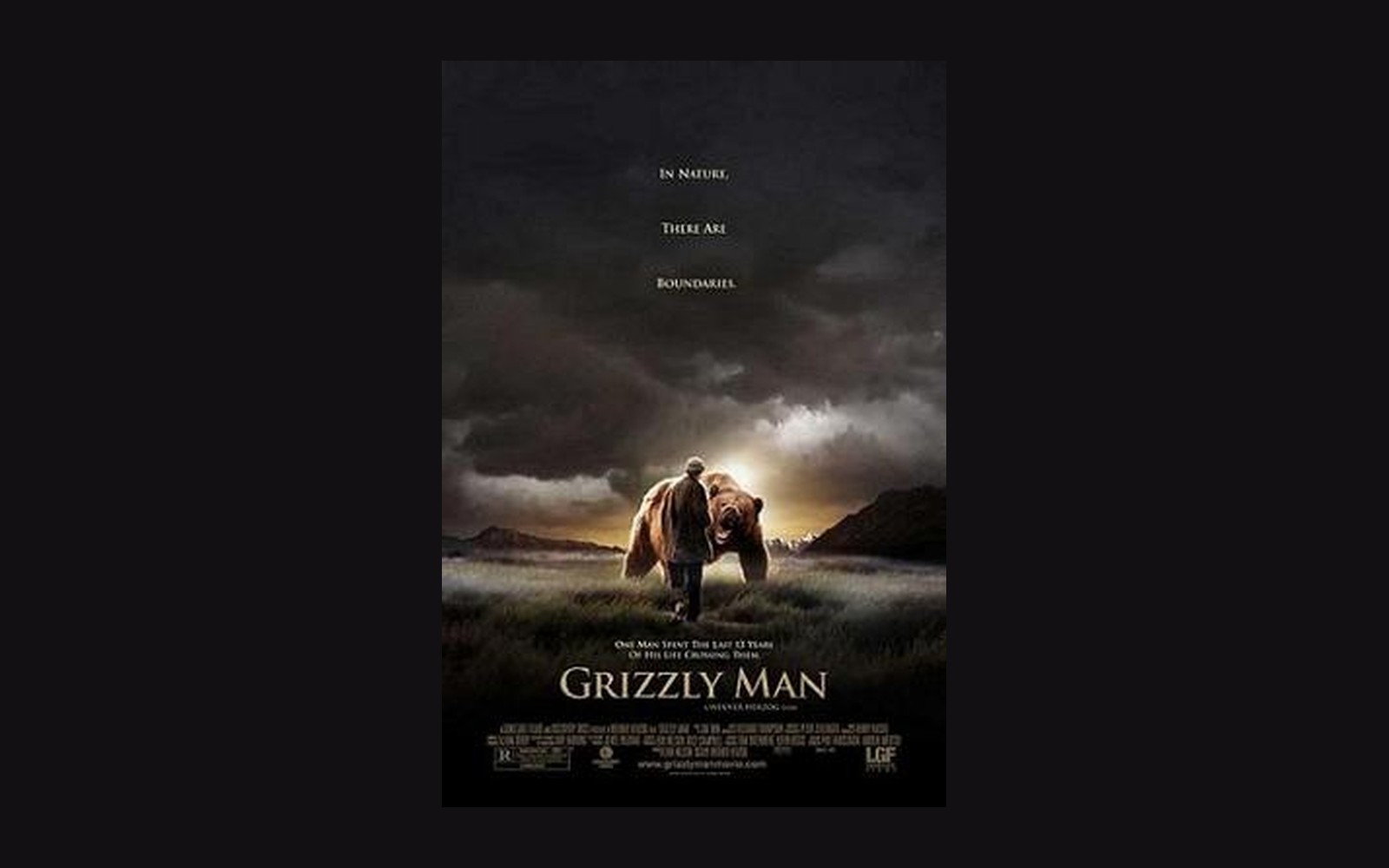
Herzog listens to a recording he refuses to play for the audience, then tells its owner to destroy the tape.
Herzog at the Headphones
The Filmmaker Who Made Himself the Verdict
In Grizzly Man (2005), Werner Herzog turns one scene of restraint into the film's most troubling ethical act.
Timothy Treadwell spent thirteen summers living among brown bears in Alaska's Katmai National Park before he and his companion Amelia Huguenard were killed by a bear in October 2003. His camera was running when it happened. The lens cap was on; the audio recorded everything. That tape exists. Herzog, assembling Grizzly Man from over a hundred hours of Treadwell's own footage, obtained access to it.

What he chose to do with that access defines the film's place in documentary history. In the scene in question, Herzog sits with Treadwell's friend and former girlfriend Jewel Palovak and listens to the recording through headphones, the earphones pressed to his head, his face visible to the camera. Palovak has never heard it. The audience never hears it either. What we receive instead is Herzog's face, and then Herzog's voice: a measured, accented narration instructing Palovak that she must destroy the tape, that she should never listen to it, that it will bring her nothing but pain.
The gesture reads as protective and humane. It is also something else entirely: a filmmaker making himself the gatekeeper of another person's death, then narrating that decision to a global audience. Herzog does not withhold the tape silently. He performs the withholding, on camera, and draws a conclusion — not only for Palovak but for the viewer — about what the tape means and what it reveals about Treadwell's psychology. The director's voice, throughout Grizzly Man, openly disagrees with Treadwell's belief that nature is benign; this scene is where that disagreement hardens into judgment delivered over a dead man's grave.
The tradition Herzog is working against — and working through — is the observational mode of Direct Cinema, which premises the filmmaker as invisible witness. Frederick Wiseman, Barbara Kopple, the Maysles brothers: their presence shapes their films, but the shaping is structural, not announced. Herzog's narration announces it constantly. By the headphones scene, he has already called Treadwell's footage remarkable and Treadwell's worldview deluded, within the same breath. The headphones scene simply makes the logic explicit: Herzog is not a witness. He is an author, and authorship in documentary carries moral weight that observation can at least pretend to evade.
Whether that weight is responsibly carried remains the film's open question. Grizzly Man received wide critical acclaim and is widely taught and studied. What it did to Timothy Treadwell's reputation — sympathetic, skeptical, finally almost pitying — was done without his consent, and done beautifully, and done in plain sight.
Read next in Makers