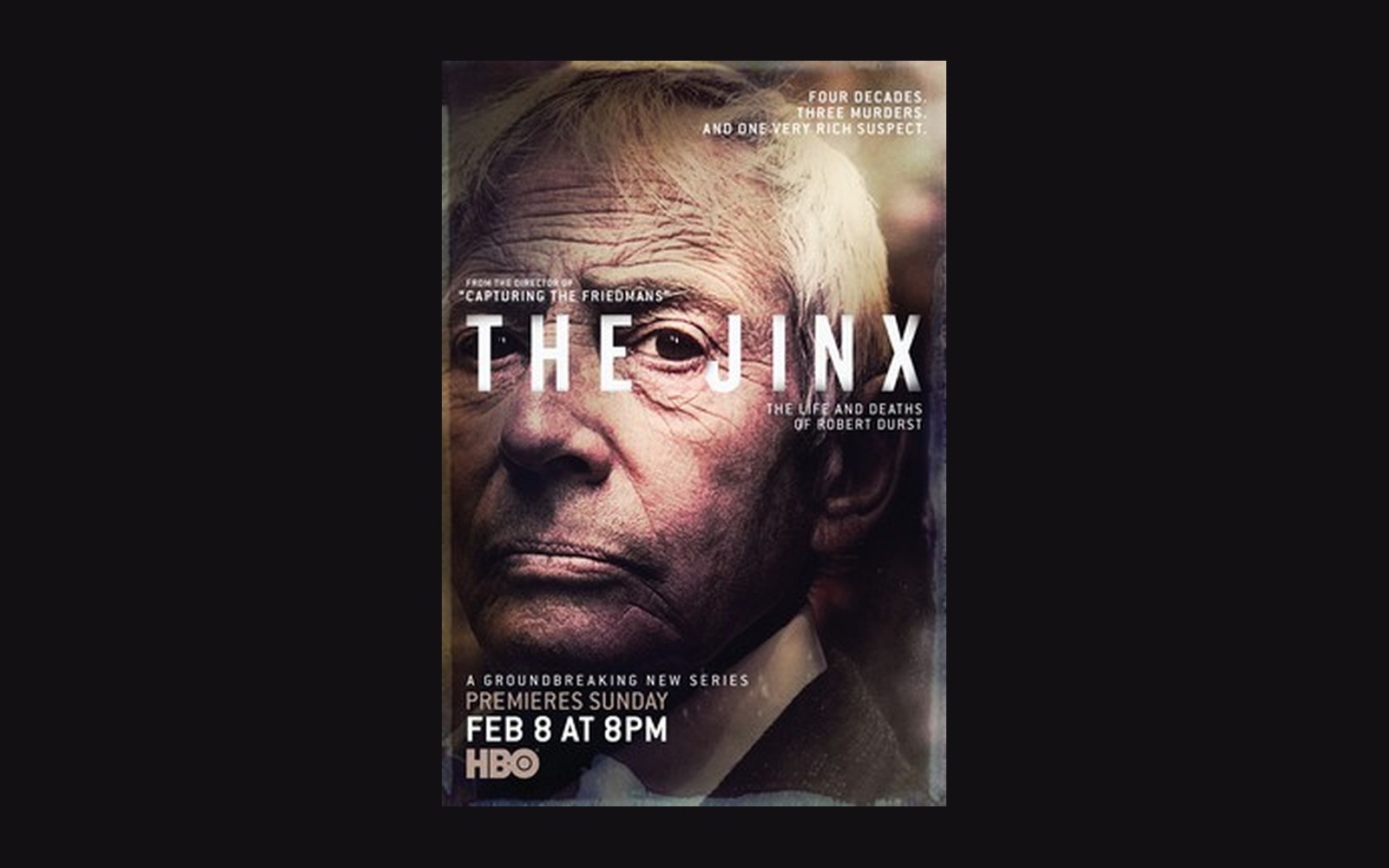
HBO sold six episodes on a suspect's face, and the series' aftermath ended up in a courtroom.
After The Jinx, the Form Had a Problem
The Bargain Nobody Read
Two true-crime series in 2015 rewrote documentary economics and left a trail of legal and ethical wreckage that the field is still sorting through.
Andrew Jarecki's The Jinx: The Life and Deaths of Robert Durst (HBO, 2015) and Laura Ricciardi and Moira Demos's Making a Murderer (Netflix, 2015) arrived within months of each other and between them demonstrated that the long-form documentary series — not the single theatrical feature — was now the dominant commercial form. Streaming and premium cable could absorb ten hours where a cinema could not absorb two, and advertisers and subscribers would follow. The economics were transformative.

The ethics were more complicated. Both productions spent years with their subjects, building access through sustained proximity — the same logic that governs Barbara Kopple's work or Frederick Wiseman's, except that Jarecki's team was simultaneously coordinating with law enforcement. Durst was arrested for the murder of Susan Berman in March 2015, the day before The Jinx's finale aired; prosecutors later confirmed that the production had shared key evidence — an envelope whose handwriting matched a letter Durst wrote — with the Los Angeles district attorney's office before broadcast. The series had become, in effect, an investigative instrument. That may have served justice. It also meant the filmmakers were not journalists protected by shield law, not detectives operating under criminal procedure, and not documentarians in any previously settled sense.
Making a Murderer drew parallel scrutiny. Ken Kratz, the special prosecutor in Steven Avery's trial, and other members of the prosecution team publicly argued that the series omitted evidence material to a fair assessment of the case. Whether the omissions were editorial judgment or motivated advocacy, the objection exposed something structural: a ten-episode format, shaped by a streaming platform's need for audience retention, is not a neutral container for an active legal matter.
What both series clarified is that access — sustained, intimate, financially resourced access — creates obligations the form has never been forced to codify. The participatory mode, as Bill Nichols described it, assumes the filmmaker enters a subject's life. It has always been quieter about what it owes when it leaves.
Read next in Now